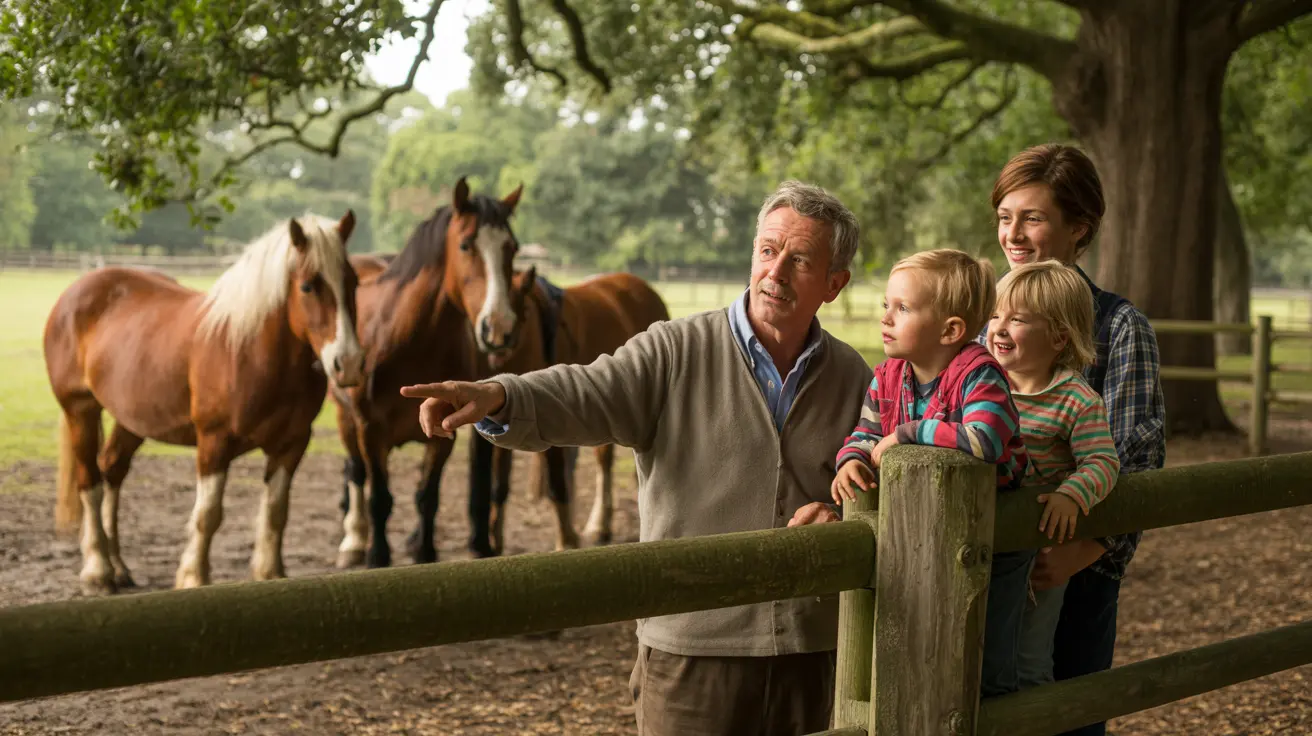
Richmond Park’s gentle giants await your family visit
While families across the borough discover new weekend activities, Richmond Park’s resident Shire horses continue their quiet work maintaining the ancient landscapes your children see from Pembroke Lodge. These magnificent working horses offer one of London’s most authentic connections to countryside traditions, right on your doorstep.
Meeting the working horses
The Royal Parks’ Shire horses live year-round in Richmond Park, where their conservation grazing helps maintain the grassland habitats that support the park’s famous deer herds and wildflower meadows.
You can find these gentle giants working across the park’s 2,500 acres, particularly in areas where mechanical mowers cannot reach safely around the ancient oak trees. The horses work alongside park rangers to preserve landscapes that have remained unchanged since medieval times. Children particularly enjoy watching the horses at work, learning how traditional methods still play a vital role in modern conservation. The Royal Parks runs regular family sessions where you can meet the horses up close, learn about their daily routine, and understand their important environmental work.
Watching these working horses offers your family a living lesson in how heritage and conservation interweave in Richmond’s treasured green spaces.
Frequently asked questions
When can families visit the Shire horses in Richmond Park?
The horses work throughout the year, but The Royal Parks organises specific family meeting sessions during school holidays and weekends. Check The Royal Parks website for current schedules and booking information for hands-on activities.
Are the horse activities suitable for young children?
Yes, the family sessions are designed for all ages. The Shire horses are exceptionally gentle and well-trained for public interaction. Rangers supervise all activities and adapt the experience to suit different age groups.
Where in Richmond Park can we find the horses?
The horses work across different areas depending on conservation needs. The best way to guarantee seeing them is through the organised family activities, though you may spot them during regular park visits near Pen Ponds or the Isabella Plantation areas.