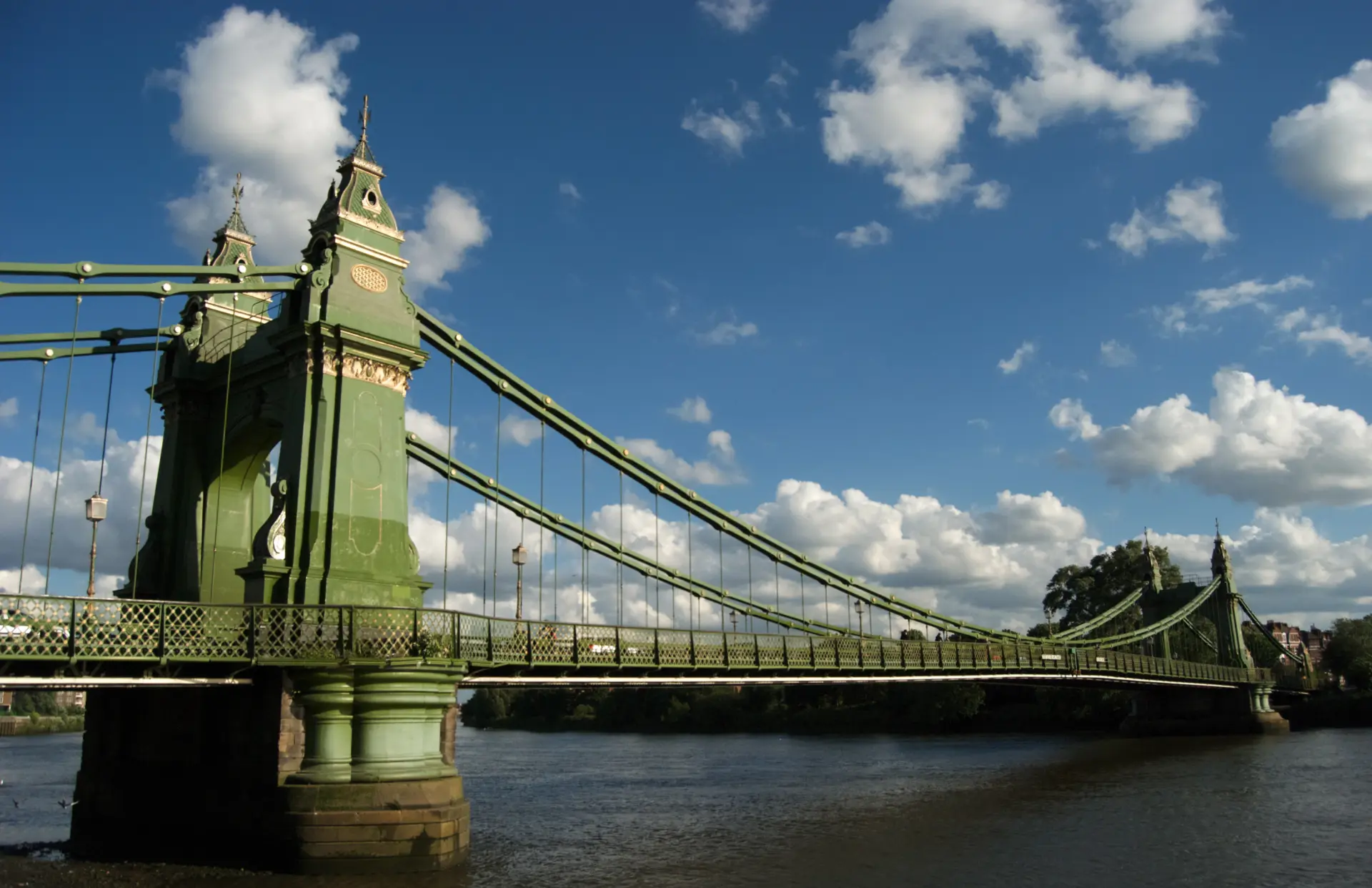
Richmond travel Hammersmith Bridge remains uncertain as the £300 million restoration plan faces renewed funding challenges, leaving thousands of west London residents with no clear timeline for the crossing to reopen to motor traffic. The Grade II-listed bridge has been closed to vehicles since 2026, forcing Richmond commuters bound for Hammersmith and beyond to add miles and minutes to their daily journeys via Chiswick or Putney. What looked like progress last year now sits in the balance, and the detour may yet become permanent.
The revised proposal follows discussions with the UK government over available infrastructure funding, casting fresh doubt on when the 1887 crossing will carry cars again.
Why the restoration plan is now at risk
Funding remains the central obstacle.
The £300 million figure has been known for some time, but the government has yet to commit the full sum required to restore Hammersmith Bridge to its former capacity. Discussions between the Department for Transport, Transport for London, and Hammersmith & Fulham Council have produced revised proposals that may prioritise pedestrians, cyclists, and buses over private cars, a compromise that would cut costs but leave the crossing fundamentally altered. No firm decision has been announced, and the uncertainty means contractors cannot begin the final phase of work.
The longer the impasse continues, the more likely it becomes that your route across the Thames will change for good.
What it means for Richmond commuters
The detour is not new, but its permanence might be.
Since 2026, drivers heading north from Richmond, Mortlake, or East Sheen have had to choose between Chiswick Bridge to the west or Putney Bridge to the east, adding between two and four miles to a journey that once took minutes. The closure has also pushed more traffic onto the A316 and through residential streets in Barnes and Castelnau, creating pinch points that worsen during peak hours. If Hammersmith Bridge reopens only to buses and bikes, as some proposals suggest, that congestion will remain a feature of daily life rather than a temporary inconvenience.
The practical question is no longer when the bridge reopens, but whether your car will ever be welcome on it again.
What this means for you
Keep your current route and allow extra time for the foreseeable future. The A316 to Chiswick Bridge remains the most reliable option for drivers heading north from Richmond, though queues build quickly between 8am and 9am. If you commute regularly, consider whether the 33 or 337 bus routes offer a practical alternative; both run from Richmond to Hammersmith and would benefit from any bus-priority reopening of the bridge. Watch for updates from Transport for London on the restoration timeline, but plan as though the detour will last well into 2026. If you cycle, the bridge already carries foot and bike traffic under a stabilisation scheme, and that access is unlikely to change.
Hammersmith Bridge remains a vital piece of west London infrastructure in limbo, and Richmond residents face another year of disruption at minimum. The path forward depends on funding decisions that sit well beyond local control, so the best course is to treat the detour as permanent until proven otherwise.
For anyone living south of the Thames between Richmond and Barnes, Hammersmith Bridge is not an abstract infrastructure question but the difference between a ten-minute drive and a forty-minute slog through Chiswick traffic.
Frequently asked questions
Can I still walk or cycle across Hammersmith Bridge?
- Yes. Pedestrians and cyclists have access under a stabilisation scheme put in place after the bridge was closed to motor traffic. This access is expected to continue regardless of what happens with the full restoration.
When will Hammersmith Bridge reopen to cars?
- There is no confirmed date. The restoration plan is at risk due to funding uncertainty, and some revised proposals may reopen the bridge only to buses, bikes, and pedestrians rather than private cars.
What is the best alternative route from Richmond to Hammersmith?
- Chiswick Bridge via the A316 is the most direct option for drivers, though it adds approximately three miles and 15 to 20 minutes during peak times. Putney Bridge is slightly further but may be quicker depending on traffic conditions in Barnes.
Will buses ever cross Hammersmith Bridge again?
- Possibly. Some of the revised proposals prioritise reopening the bridge to buses and bikes before private cars, which would restore some public transport links across the river. No firm decision has been made.
Useful resources
Castelnau Dentists
Castelnau Dentists is a well-regarded dental practice situated at 200 Castelnau in Barnes, SW13, serving the local community with patient-centred care delivered by a team of dentists and hygienists. The…
The Bench
The first leaves turning in Richmond gardens
The first leaves turning in Richmond gardens signal autumn’s arrival with quiet certainty. Horse chestnuts at Marble Hill Park show yellow edges. Lime trees along the towpath glow amber in late afternoon light. The change creeps in slowly, then all at once. You notice it first in the morning. Shadows stretch longer across the lawn. […]
Local groups