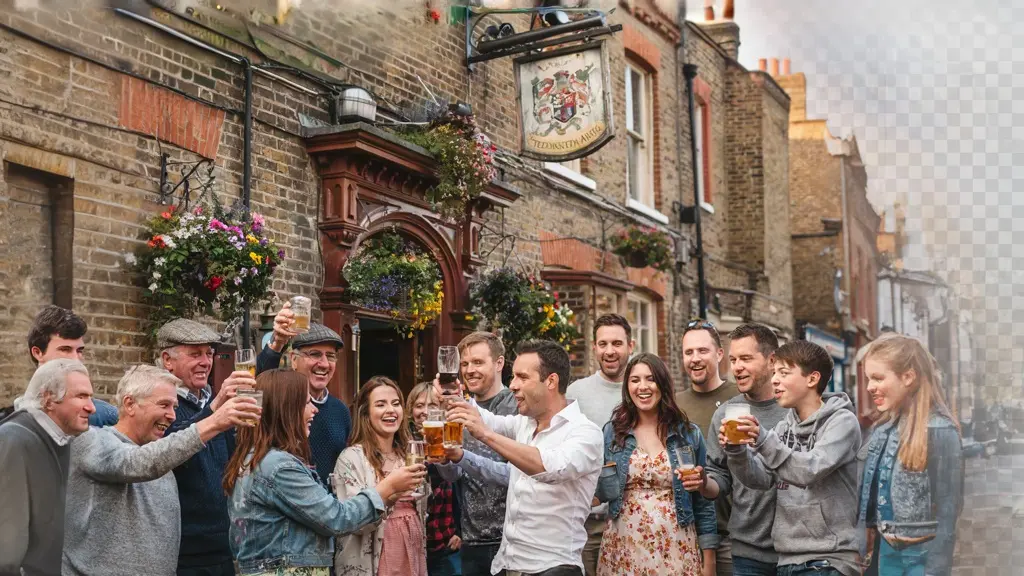
The Lion on Wick Road, the Teddington pub saved by community shareholders two years ago, has been featured in the Sunday Times as a model for how neighbourhoods can keep their locals alive. While two UK pubs close every day according to the British Beer and Pub Association, The Lion’s story offers a tested blueprint that other communities are now watching closely.
The Sunday Times Home and Property section highlighted the Wick Road venue under the headline ‘The community that clubbed together to save its beloved pub’.
From local rescue to national example
What began as a neighbourhood campaign has become a case study.
The Lion was facing closure when Teddington residents formed a community benefit society, raised capital through local shares, and took ownership of the building. The model has proved financially sustainable while preserving the pub’s role as a genuine community hub rather than a gastropub conversion. The Sunday Times coverage positions it alongside a handful of similar rescues nationwide, but The Lion’s continued success after the initial enthusiasm has made it particularly noteworthy to journalists and other communities exploring the same path.
It demonstrates that community ownership can work beyond the rescue phase, a question many campaigns face when the initial energy fades.
Why the story matters beyond Teddington
The national spotlight reflects a wider crisis in the pub sector.
According to the British Beer and Pub Association, an average of two UK pubs close permanently every day. The combination of high property maintenance costs and recent government tax increases on businesses has made the traditional landlord model unviable for many venues, particularly those in residential areas where property values tempt owners toward conversion. The Lion’s community ownership structure removes that conversion incentive entirely, as shareholders are local residents invested in keeping it as a pub. The Sunday Times article examines how this approach might be replicated, though it requires significant volunteer governance and a community willing to invest without expectation of financial return.
The coverage suggests The Lion's success is prompting serious questions about whether community ownership should become standard practice for threatened locals, rather than a last resort.
How we got here
- 2026
- The Lion faced closure and was put up for sale by its previous owners
- 2026
- Local residents formed a community benefit society and launched a share offer
- 2026
- Community shareholders successfully purchased the building and took ownership
- 2026
- The Sunday Times featured The Lion as a national model for community pub ownership
The Lion pub sits at the corner of Wick Road, a residential area where a traditional local serves a different function than the riverside venues closer to Teddington Lock. Its location made it vulnerable to residential conversion, as the building and land held more value as housing than as a pub business under conventional ownership.
The Wick Road model in practice
The proof sits in the everyday operation.
The Lion continues to function as a traditional local while hosting community events, private hires, and regular activities that strengthen its role beyond simply serving drinks. Shareholders receive updates on performance and have a voice in major decisions, but day-to-day management runs through employed staff rather than volunteer labour. This hybrid approach has kept the quality consistent while maintaining the community accountability that made the rescue possible. Other communities considering similar rescues often visit to see the model in action, and the Sunday Times feature will likely increase that interest.
What works in Teddington may not translate everywhere, but the article confirms that the experiment has moved beyond novelty into proven sustainability.
What this means for you
If you are a Lion shareholder, the national coverage reinforces the viability of your investment in community ownership, though financial returns remain modest by design. For residents of other Richmond borough areas watching their own locals struggle, the Sunday Times article provides a documented pathway and a contact point for learning how the model works in practice. The Plough at Leigh in Surrey and similar community-owned pubs have formed informal networks sharing governance documents and financial structures, and The Lion’s visibility will strengthen that support system. If a pub you value is rumoured for sale or closure, the time to explore community purchase is before it reaches the open market, as that window closes quickly once commercial buyers become involved.
The Lion’s journey from threatened closure to Sunday Times feature confirms that community ownership can sustain a pub beyond the initial rescue. For Teddington, it preserves a local institution; for other neighbourhoods, it offers a tested alternative to watching another pub become flats.
The article arrives as government tax rises and building costs make traditional pub ownership increasingly unviable across Britain, putting hundreds of community meeting places at risk.
Frequently asked questions
Can you still invest in The Lion as a community shareholder?
- Share offers for community benefit societies typically close once the purchase is complete, but The Lion may open additional fundraising rounds for improvements or expansion. Contact the management committee directly through the pub to enquire about current opportunities or to be notified of future share offers.
How much do community shareholders earn from The Lion?
- Community benefit societies are structured to serve the community rather than generate investor profit. Any surplus is typically reinvested in the building, used to improve facilities, or distributed as modest interest capped by the society’s rules. Shareholders should expect social return rather than financial gain.
What other pubs in Richmond borough are community-owned?
- The Lion appears to be the only fully community-owned pub in Richmond borough at present. Several others operate under different protective models such as Asset of Community Value listings, which give communities time to mount a purchase bid if the pub is sold, but do not constitute ownership.
How do you start a community purchase of a threatened pub?
- Begin by forming a steering group of interested residents, then establish a community benefit society through the Financial Conduct Authority. You will need legal advice, a business plan, and typically a share offer to raise capital. The Plunkett Foundation and the More Than A Pub programme provide templates and guidance specifically for community pub purchases.
Does community ownership change what a pub can offer?
- Community-owned pubs retain their alcohol licence and operate commercially like any other pub, but governance lies with local shareholders rather than a private landlord or pub company. This often results in broader community use including meeting space, events, and activities beyond traditional pub trade, as the building serves member interests rather than maximum profit.
Castelnau Dentists
Castelnau Dentists is a well-regarded dental practice situated at 200 Castelnau in Barnes, SW13, serving the local community with patient-centred care delivered by a team of dentists and hygienists. The…
The Bench
The blossom streets of Richmond turn white and pink
The blossom streets of Richmond turn white and pink every spring, usually in late March or early April. Cherry, plum, and ornamental pear trees line the avenues. The petals fall like snow when the wind picks up. You see it best on quiet residential roads: Sheen Lane, the streets behind Kew Green, the avenues near […]
Local groups