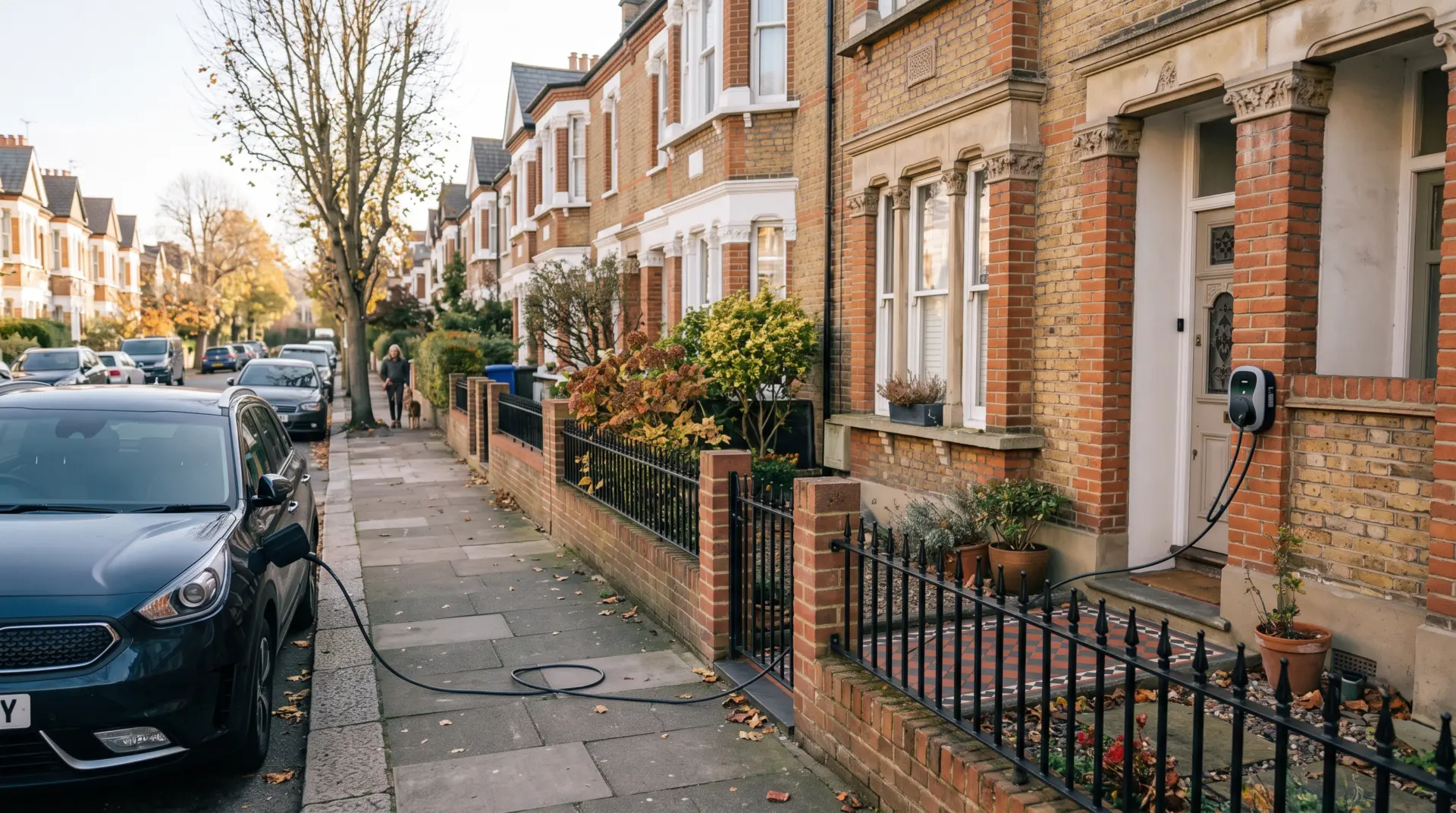
If you have been weighing up an electric vehicle but worrying about the cost and hassle of installing EV chargers in Richmond, the government has just removed a significant barrier. From today, you no longer need planning permission to run a charging cable across the pavement from your home to your car, a change that saves up to £300 in application fees and weeks of waiting.
The planning reform applies to cross-pavement cable channels, which let residents without off-street parking charge electric vehicles parked on the road.
What the planning change means
The new rule removes a layer of bureaucracy that made home charging prohibitively complicated for many Richmond residents.
Until now, anyone wanting to install a cable channel across the pavement needed to submit a planning application to Richmond Council, pay fees that could reach £300, and wait several weeks for approval. That process has now been scrapped entirely for standard installations. The government estimates this will encourage thousands more homeowners to switch to electric vehicles, particularly those living in terraced streets without driveways. Cross-pavement channels are discreet rubber or metal covers that protect the charging cable where it crosses the footway, designed to meet accessibility standards so wheelchairs and pushchairs can pass safely.
The change recognises that the biggest obstacle to EV adoption in urban boroughs like ours is not the vehicle cost but the charging infrastructure at home.
How the savings add up
The financial benefit goes beyond the planning fee itself.
The £300 saving covers the council application cost, but residents also avoid the time spent preparing drawings, completing forms, and potentially hiring a planning consultant. Installation companies report that planning uncertainty often added months to projects, during which equipment prices could rise or government grants expire. With immediate permission now guaranteed for compliant installations, you can move straight to choosing a registered electrician and applying for any available grants, such as the EV chargepoint grant for flat owners or the workplace charging scheme if you run a business from home. Some Richmond streets, particularly around Twickenham and St Margarets, have already seen a small but growing number of cable channels appear as early adopters tested the system.
Removing the planning hurdle means your main consideration is now the installation quality and whether your electrical supply can handle the load, not navigating council processes.
What this means for you
If you are considering an electric vehicle, your first step is to contact a registered electrician who specialises in EV charger installations to assess your property and provide a quote. Make sure any cross-pavement channel they propose meets the Department for Transport’s accessibility guidance, which requires a minimum clear width and a smooth, trip-free surface. You still need to notify your buildings insurer and, if you lease your home, get your landlord’s written consent. Check the government’s EV chargepoint grant eligibility on the GOV. UK website, as you may qualify for up to £350 towards installation costs if you live in a flat or rental property. Richmond Council’s highways team can advise on any specific local requirements, such as whether your pavement width is sufficient, though they no longer control the planning permission itself.
This planning reform is a practical step that aligns national climate policy with the reality of terraced streets and limited off-street parking across Richmond. For residents who have been waiting for a simpler, cheaper route to home charging, that moment has arrived.
Frequently asked questions
Do I still need any permissions to install a cross-pavement EV charger?
- You no longer need planning permission, but you must use a registered electrician, notify your buildings insurer, and get landlord consent if you rent or lease. The installation must meet accessibility standards set by the Department for Transport.
How much does a cross-pavement cable channel cost to install?
- Installation costs vary depending on the distance from your fuse box to the pavement and the type of channel used, typically ranging from £800 to £1,500. This is separate from the £300 planning fee you will now save.
Can I use a cross-pavement charger if I live on a busy road?
- Yes, provided the installation meets safety and accessibility standards. The channel must leave enough clear pavement width for wheelchairs and pushchairs, and your electrician will assess whether your specific location is suitable.
Are there grants available to help with installation costs?
- The EV chargepoint grant offers up to £350 for eligible flat owners and renters. Speak to your installer about current schemes, as availability and criteria change periodically.
Useful resources
Aldwych Factors Ltd
David White Consulting, trading as Aldwych Factors Ltd, is a specialist business advisory practice focused on helping company owners and chief executives move beyond competing on price. Working with businesses…
The Bench
The sounds of the seasons in Richmond
The sounds of the seasons in Richmond arrive before you see them. A swift’s scream high over the river in May tells you summer is coming. The first roar of a stag in Richmond Park means October has turned. These are the voices of the borough’s calendar. You learn them without trying. The dawn chorus […]
Local groups
Richmond Local History Society
The Richmond Local History Society is a community group dedicated to exploring and preserving the rich history of Richmond and its surrounding…
Richmond & Twickenham Photographic Society (RTPS)
The Richmond & Twickenham Photographic Society (RTPS) is a community-minded photography club serving enthusiasts across the Richmond upon Thames area, including Kew…
Teddington Wine Society
The Teddington Wine Society is a community group based at the Landmark Arts Centre in Teddington, TW11 9NN, bringing together local residents…