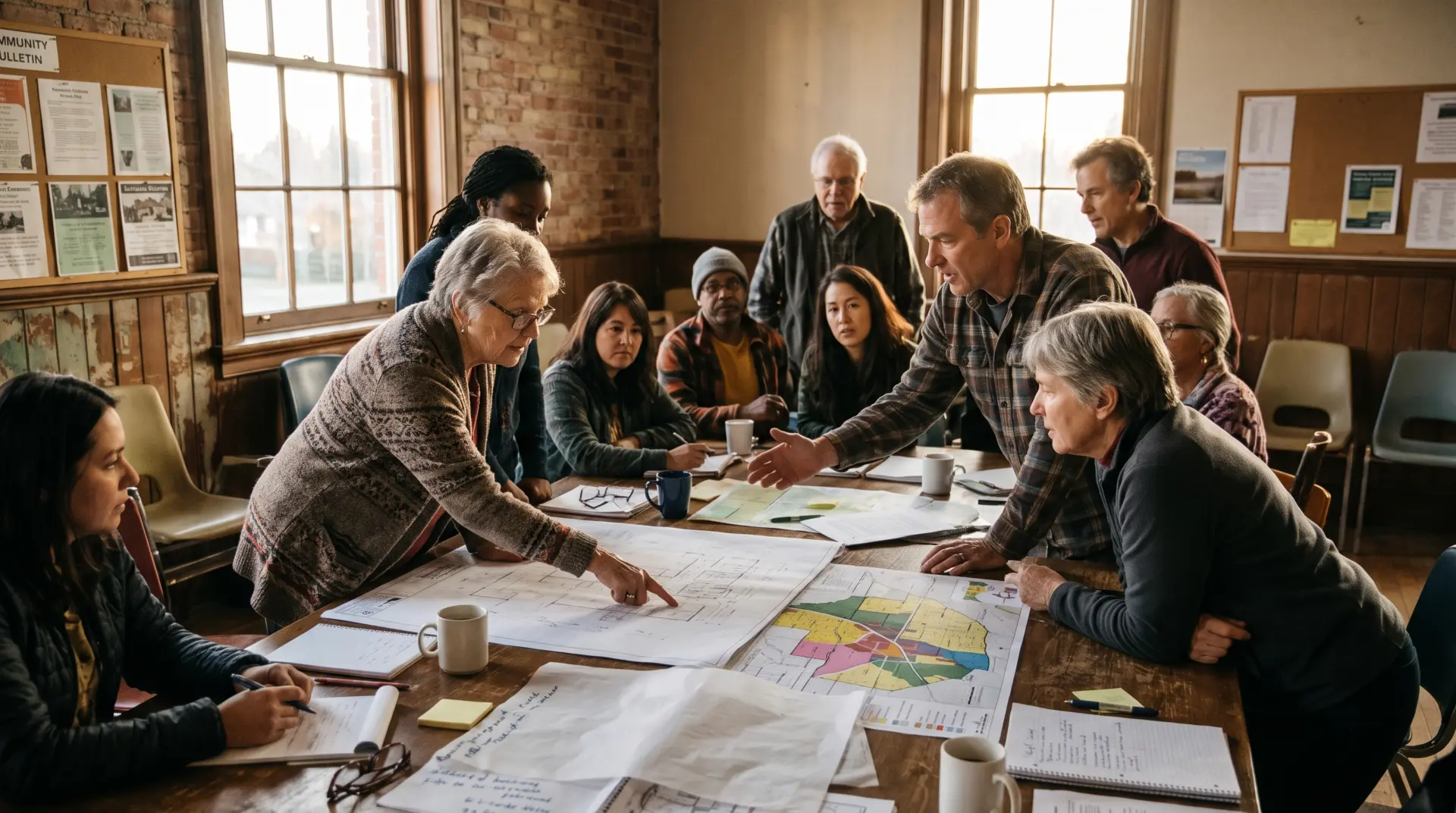
Town planning advocacy in Richmond has a dedicated champion in The Richmond Society, the community charity that has been holding the line on development standards for decades. While many residents follow individual planning applications as they arise, the Society takes the longer view, working to shape the policies and principles that determine whether new buildings enhance or erode the character you value. If you have ever wondered who speaks for Richmond when developers come calling, the answer is probably already working on your behalf.
The Richmond Society operates as a civic voice on planning matters, translating council process into resident action and ensuring that architectural and historical considerations inform development decisions.
What the Society actually does
The Richmond Society reviews planning applications across the borough, commenting on proposals that could affect local character or set unwelcome precedents.
The charity responds to council consultations, attends planning committee meetings, and provides technical expertise that individual residents might lack. Their work ranges from opposing inappropriate developments to supporting well-designed projects that respect Richmond’s heritage. The Society also campaigns for stronger design standards in local planning policy, pushing for guidelines that require new buildings to contribute positively to streetscapes and conservation areas. They maintain relationships with council officers, ward councillors, and heritage bodies, creating channels through which resident concerns can reach decision-makers with authority rather than just volume.
The advocacy is most effective when it combines technical planning knowledge with evidence of genuine community feeling, which is where your participation becomes valuable.
Why independent advocacy matters now
Richmond faces persistent development pressure, with every brownfield site and underused building attracting proposals that test planning policy.
The borough’s appeal to developers means residents need an organisation that understands planning law, design principles, and the procedural levers that can be pulled before a committee votes. The Richmond Society provides that specialist knowledge without the commercial interests that sometimes colour other voices in the planning process. They can argue on architectural merit, on heritage grounds, or on planning policy interpretation, giving councillors substantive reasons to refuse applications that residents instinctively know are wrong but struggle to articulate in planning terms. The charity’s long institutional memory also helps, as they can point to previous decisions, appeal outcomes, and policy commitments that ought to guide current cases.
In a system that favours applicants with expensive planning consultants, an independent advocate levels the field considerably.
How we got here
- 1961
- The Richmond Society founded to protect local heritage and influence planning decisions
- 1970s-1980s
- Society campaigns successfully for conservation area designations across Richmond
- 2000s
- Advocacy shifts to include design quality and public realm improvements alongside heritage protection
- 2026
- Society continues active review of planning applications and consultation responses across the borough
The Society’s intervention on several riverside development proposals has demonstrated how informed advocacy shapes outcomes. In cases along Richmond riverside, their detailed responses on matters such as building height, materials, and impact on protected views have influenced planning officers’ recommendations and committee decisions, resulting in revised schemes that better respect the setting.
How planning advocacy has evolved locally
The Richmond Society has adapted its methods as planning battles have shifted from large-scale demolition threats to incremental erosion through permitted development and minor applications.
Where previous generations fought to save landmark buildings from wholesale destruction, today’s advocacy focuses on preventing the gradual loss of character through cumulative small changes: basement excavations, roof extensions, and conversions that individually seem modest but collectively transform streetscapes. The Society now monitors far more applications than it did twenty years ago, because the threat comes in higher volume and lower visibility. They have also broadened their remit to include public realm quality, green infrastructure, and the design of streets and spaces, recognising that planning is about more than controlling buildings. Digital tools have changed the work too, making it easier to track applications but also enabling developers to submit proposals with less physical presence in the community, so advocacy groups must work harder to ensure local voices are heard.
The fundamentals remain constant though: good advocacy translates what residents care about into arguments that planning law respects.
What this means for you
You can support the Society’s work by becoming a member, which strengthens their mandate to speak for the community and funds their planning expertise. When a development near you concerns you, contact the Society with details, as they can advise whether it raises legitimate planning issues and how best to frame your objection. Consider attending their public meetings, which often feature talks on planning policy changes and current applications of significance. If the council opens a consultation on planning policy or design guidance, watch for the Society’s analysis, which can help you understand what is actually being proposed and where to focus your response. Your individual comments on planning applications carry weight, but they carry more when they align with the technical arguments that the Society is making on the same case, creating a chorus of informed objection rather than scattered complaints.
The Richmond Society provides the specialist planning advocacy that preserves what residents value about this borough, translating concern into influence through knowledge of policy and process. Your engagement with their work, whether as a member or an informed supporter of their positions, strengthens the collective voice that shapes how Richmond develops.
The Society’s advocacy work intensifies during local plan review periods, when the council sets the framework that will govern development decisions for years to come. Knowing when those consultations open gives you the chance to add your voice at the moment it carries most weight.
Frequently asked questions
How do I know which planning applications the Richmond Society is reviewing?
- The Society publishes summaries of significant applications they are commenting on through their newsletter and website updates. You can also contact them directly about a specific application in your area to ask if they are aware of it and whether they plan to submit a formal response to the council.
Can the Richmond Society object to a planning application on my behalf?
- The Society submits its own formal responses based on planning policy and heritage considerations, but they cannot object on behalf of individual residents. Your personal objection as a resident carries separate weight with the council, and the Society can advise you on the planning grounds most likely to be taken seriously by planning officers and committee members.
Does membership of the Richmond Society give me any say in which developments they oppose?
- Members can raise concerns about specific applications with the Society’s planning team, and the organisation considers member input when deciding which cases warrant formal response. The Society’s committee makes final decisions on which applications to engage with based on their potential impact on borough character and planning policy precedent.
What is the difference between the Richmond Society and residents' associations?
- The Richmond Society operates borough-wide with specialist planning expertise and a focus on heritage and design policy, while residents’ associations typically concentrate on issues within a specific neighbourhood. The two often work together on planning matters, with residents’ associations bringing local knowledge and community mobilisation while the Society provides technical planning arguments and policy analysis.
How effective is planning advocacy when councils are under pressure to approve development?
- Well-informed advocacy that grounds objections in planning policy, design guidance, and heritage designations gives councillors defensible reasons to refuse applications, reducing the risk of costly appeals. Councils value substantive objections that identify genuine planning harms over generalised opposition, which is where organisations like the Richmond Society add most value to resident concerns.
Useful resources
Castelnau Dentists
Castelnau Dentists is a well-regarded dental practice situated at 200 Castelnau in Barnes, SW13, serving the local community with patient-centred care delivered by a team of dentists and hygienists. The…
The Bench
The sounds of the seasons in Richmond
The sounds of the seasons in Richmond arrive before you see them. A swift’s scream high over the river in May tells you summer is coming. The first roar of a stag in Richmond Park means October has turned. These are the voices of the borough’s calendar. You learn them without trying. The dawn chorus […]
Local groups
Arts Richmond
Arts Richmond is a community-focused arts organisation based in Richmond, dedicated to supporting and promoting the arts across the local area. It…
Whitton Photographic Club
Whitton Photographic Club is a community photography group based at Whitton Community Centre on Percy Road, bringing together local residents with a…
Borough of Twickenham Local History Society
The Borough of Twickenham Local History Society is a community organisation dedicated to exploring, preserving and sharing the rich history of Twickenham…