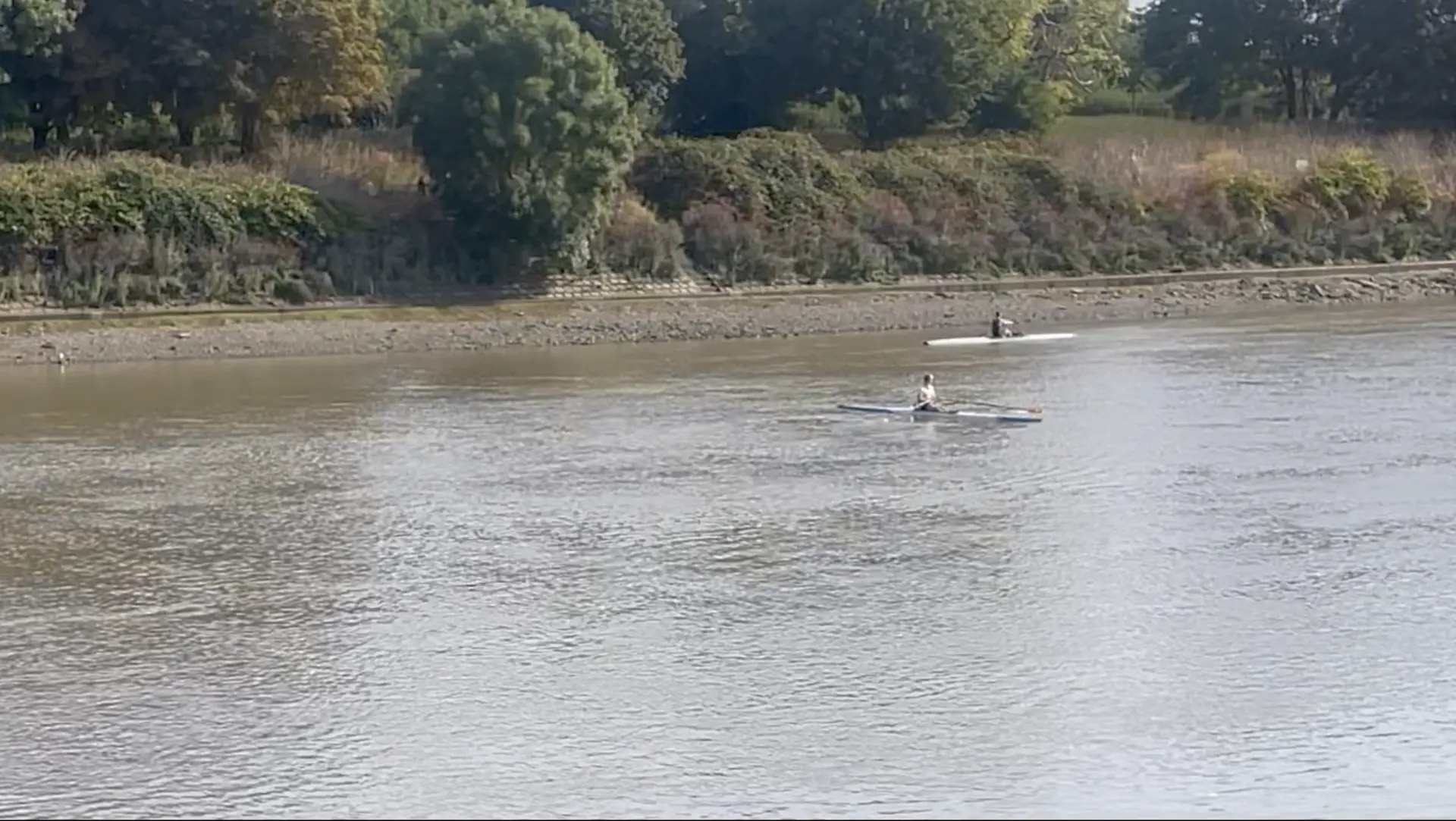
The discovery of a dead dolphin in Richmond Thames near Mortlake this week has brought the health of our stretch of the river into sharp focus. The Port of London Authority confirmed the rare sighting on Thursday, noting that dolphins this far upstream are unusual and the death particularly concerning. For those of us who walk the towpath daily or row these waters, it is a sobering reminder that the Thames we treasure remains a working ecosystem under pressure.
The Port of London Authority reported the discovery on Thursday, prompting immediate questions about water quality and the threats facing marine life in urban waterways.
Why dolphins venture this far upstream
Dolphins occasionally follow fish stocks into the Thames estuary, but a sighting as far west as Mortlake is genuinely rare.
The animal may have been pursuing prey or become disoriented, though the exact cause of death has not yet been confirmed. Marine biologists note that urban waterways present multiple hazards: boat strikes, entanglement in debris, pollution, and sudden changes in water salinity can all prove fatal to mammals adapted for coastal or open-sea conditions. The Thames between Richmond and Mortlake is heavily trafficked by leisure craft, rowing clubs, and commercial vessels, creating a complex environment for any marine visitor. While the river has improved dramatically in recent decades, supporting over 120 species of fish and attracting seals as far upstream as Teddington, it remains fundamentally an urban waterway with industrial legacy pollutants and modern pressures.
The fact that a dolphin was spotted in the Thames as far upstream as Mortlake is particularly concerning, according to the Port of London Authority.The incident will likely trigger water quality testing and a review of wildlife monitoring protocols for this section of the river.
If you spot distressed marine life in the Thames, the Port of London Authority asks that you call their 24-hour control centre rather than approach the animal yourself.
What the discovery tells us about our river
This death is a prompt to look more closely at the Thames we live beside.
Water quality in the tidal Thames has improved markedly since the 1950s, when the river was effectively lifeless, but urban pressures remain constant. Storm overflow discharges, microplastics, and legacy contamination from centuries of industry still affect the ecosystem. The stretch between Richmond and Mortlake sits at a transition point where tidal influence begins to weaken and freshwater dominates, creating unique conditions that can stress marine visitors. Local environmental groups have long campaigned for better monitoring and stricter controls on discharge points, particularly during heavy rainfall when combined sewer overflows can release untreated waste into the river. The Richmond and Mortlake communities have a strong tradition of river stewardship through rowing clubs, conservation volunteers, and resident groups who understand that a healthy Thames requires constant vigilance, not nostalgic assumption. This incident may galvanise renewed attention on water quality reporting and public access to monitoring data.
The Thames you see from the towpath is healthier than it has been in a century, but it is not yet the river it could be.
How we got here
- 1950s
- Thames declared biologically dead due to pollution and untreated sewage
- 1960s-1970s
- Major sewage treatment works constructed across London
- 1990s
- Salmon return to the Thames for the first time in over a century
- 2000s-present
- Seals, porpoises and occasional dolphins recorded in tidal Thames
- 2026
- Dead dolphin discovered near Mortlake, prompting water quality review
The stretch of river between Richmond Bridge and Mortlake Brewery is home to multiple rowing clubs, including Tideway Scullers School and London Rowing Club, whose members train on these waters daily. Coaches and rowers are often the first to notice changes in river conditions, from algae blooms to debris accumulation, making them invaluable informal monitors of Thames health.
The Thames recovery story and what comes next
Understanding where we have come from helps clarify what still needs doing.
The Thames was declared biologically dead in the 1950s, a victim of untreated sewage, industrial effluent, and post-war neglect. The construction of modern sewage treatment works and tighter environmental regulation brought the river back to life, and by the 1990s salmon had returned for the first time in over a century. Seals are now regular visitors to Teddington Lock, just upstream from Richmond, and over 120 fish species have been recorded in the tidal Thames. Yet the river remains vulnerable. Climate change is altering temperature and oxygen levels, urban development increases surface runoff, and ageing Victorian infrastructure struggles to cope with modern demand. The death of a dolphin in our stretch of the river is not a sign that progress has reversed, but it is a reminder that recovery is not linear and vigilance cannot lapse. Local groups including the Thames Rivers Trust and the Port of London Authority continue to monitor water quality, remove debris, and advocate for infrastructure investment.
A river this improved is worth protecting with the same determination that brought it back.
What this means for you
If you use the Thames for recreation or simply enjoy walking the towpath, this incident is a prompt to stay informed about water quality in your stretch of the river. The Port of London Authority publishes water quality data and incident reports on its website, and you can sign up for alerts about pollution events or hazards. If you row, paddle, or swim in the river, check current conditions before you go out, particularly after heavy rainfall when storm overflows may have discharged. Report any distressed wildlife, unusual debris, or water discolouration to the PLA’s 24-hour control centre on 020 8855 0315. Local environmental groups including the Thames Rivers Trust welcome volunteer involvement in monitoring and clean-up efforts, and the Richmond and Kew societies regularly discuss river health at public meetings. Your council’s environmental health team can also answer questions about water quality and recreation safety. This is not a moment for alarm, but it is a good opportunity to understand the river you live beside a little better and to add your voice to those advocating for its continued recovery.
The death of a dolphin in our stretch of the Thames is a sad event, but it need not be a purely tragic one if it renews our attention to the health of the river. A waterway this improved is worth the ongoing effort required to protect it.
The Thames has seen remarkable recovery since the 1950s, when it was declared biologically dead, but this incident suggests the progress remains fragile and uneven.
Frequently asked questions
Is it safe to swim or row in the Thames near Richmond after this discovery?
- The Thames remains open for recreation, but you should always check current water quality conditions before entering the river, particularly after heavy rain when storm overflows may have discharged. The Port of London Authority and Thames Water publish water quality data, and local rowing clubs typically have current information. If you have concerns about a specific stretch, contact the PLA or your local environmental health team.
What should I do if I see a distressed dolphin, seal, or other marine animal in the Thames?
- Do not approach or attempt to help the animal yourself. Call the Port of London Authority’s 24-hour control centre on 020 8855 0315 immediately. They coordinate with the British Divers Marine Life Rescue and other specialist organisations. Note the location as precisely as possible, the animal’s condition, and any hazards such as boat traffic.
How often do dolphins come this far up the Thames?
- Sightings of dolphins as far upstream as Mortlake are rare. Dolphins and porpoises are occasionally recorded in the outer Thames estuary and lower tidal reaches, typically following fish stocks, but the combination of shallow water, heavy boat traffic, and changing salinity makes the upper tidal Thames challenging habitat for marine mammals.
What is being done to improve water quality in the Richmond stretch of the Thames?
- Thames Water is constructing the Thames Tideway Tunnel, a major infrastructure project designed to capture storm overflow discharges that currently enter the river during heavy rainfall. The Port of London Authority monitors water quality continuously, and local environmental groups conduct regular testing and clean-up efforts. The Environment Agency enforces pollution regulations and investigates incidents. You can support these efforts through volunteer programmes or by reporting pollution to the relevant authorities.
Where can I find current information about Thames water quality near me?
- The Port of London Authority publishes water quality data and alerts on its website. Thames Water provides information about planned discharges and infrastructure work. The Environment Agency’s website includes detailed water quality assessments for specific stretches of river. Local environmental groups such as the Thames Rivers Trust and Richmond and Kew societies also share monitoring data and organise community science projects.
Useful resources
Castelnau Dentists
Castelnau Dentists is a well-regarded dental practice situated at 200 Castelnau in Barnes, SW13, serving the local community with patient-centred care delivered by a team of dentists and hygienists. The…
The Bench
The first leaves turning in Richmond gardens
The first leaves turning in Richmond gardens signal autumn’s arrival with quiet certainty. Horse chestnuts at Marble Hill Park show yellow edges. Lime trees along the towpath glow amber in late afternoon light. The change creeps in slowly, then all at once. You notice it first in the morning. Shadows stretch longer across the lawn. […]
Local groups