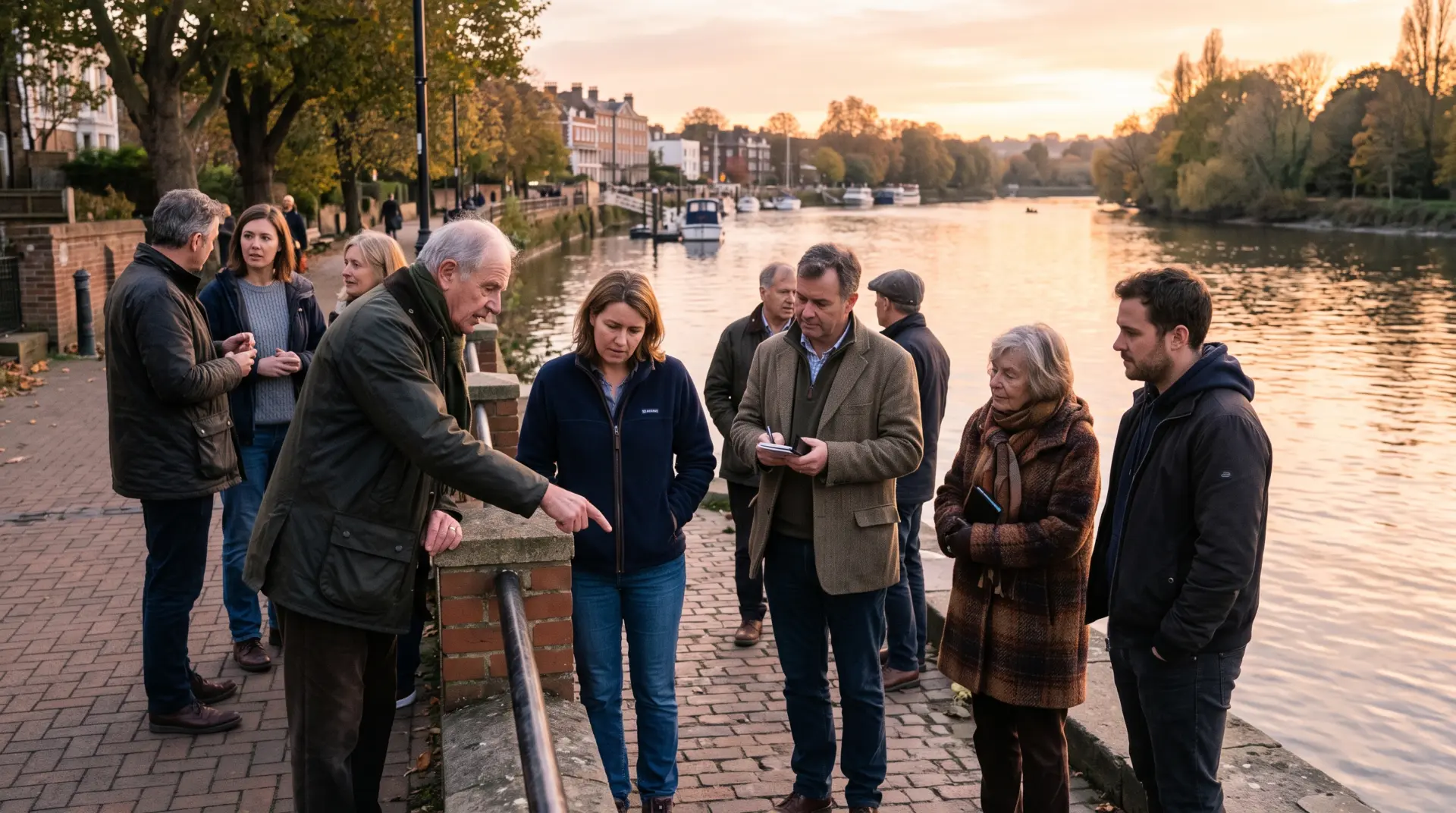
Thames sewage standards Richmond have secured support from the Palace as a petition demanding cleaner water passes 49,000 signatures and closes on November the 1st. The campaign calls for tougher enforcement on Thames Water and other utilities that discharge untreated sewage into the river you walk beside, row on, and rely on for recreation. Your riverside walks may soon be backed by stronger legal protections.
A growing coalition of residents, environmental groups, and now royal advocates are pushing for enforceable water quality standards along the Thames.What the petition is asking for
The petition demands that water companies face binding legal standards for sewage discharge. Currently, Thames Water and other utilities are permitted to release untreated sewage into the river during periods of heavy rainfall, a practice that has drawn increasing criticism from riverside communities. The petition argues that existing regulations are poorly enforced and that voluntary compliance has failed to protect water quality. With royal backing now confirmed, the campaign has gained significant momentum and is likely to attract further political attention in Westminster. The Thames you enjoy today may not meet the standards your grandchildren deserve without stronger rules now.How this affects Richmond’s riverside
Richmond residents use the Thames for rowing, walking, and wildlife watching every day. Sewage discharges can render stretches of the river unsafe for recreation and harm the ecosystem that supports swans, fish, and waterbirds. The petition specifically calls for real-time monitoring of all discharge points and mandatory public notification when releases occur, giving you the information you need to make informed decisions about river activities. Several Richmond councillors have voiced support for the campaign, recognising that cleaner water protects both public health and the borough’s appeal as a riverside destination. Knowing when the river is safe to use should not require guesswork or luck.What this means for you
If you value the Thames as a local amenity, you can add your name to the petition through the official campaign website. The petition will be presented to Parliament once it reaches 50,000 signatures, which is now imminent. Richmond Council has not yet published a formal position, but residents attending planning meetings can raise water quality concerns during the public comment periods scheduled for the third Tuesday of each month. If you regularly use the river for recreation, consider signing up for Thames Water’s discharge alerts, which provide email notifications when releases are planned in your area. Royal backing has given this campaign national visibility, but its success will depend on sustained local pressure. Your voice, added to nearly 50,000 others, helps ensure the Thames remains a clean and accessible resource for Richmond.The petition targets Section 141A of the Water Industry Act, which campaigners say lacks the teeth to prevent routine discharges during heavy rainfall.
Frequently asked questions
-
How often does Thames Water discharge sewage into the river near Richmond?
- Thames Water is required to publish discharge data, but the frequency varies depending on rainfall. During heavy storms, combined sewer overflows can activate multiple times per month. Real-time monitoring, which the petition demands, would make this information more accessible to the public.
-
Is it safe to row or swim in the Thames near Richmond?
- The Thames is generally safe for boating, but swimming is not recommended near discharge points, particularly after heavy rain. Rowing clubs and sailing schools monitor water quality and may cancel sessions following known releases. The petition aims to improve transparency so users can make informed choices.
-
What happens if the petition reaches 50,000 signatures?
- Once the petition crosses 50,000 signatures, it will be formally presented to Parliament and may trigger a debate in the House of Commons. This does not guarantee new legislation, but it increases political pressure on the government and water regulators to act.
-
Can Richmond Council enforce water quality standards on its own?
- No. Water quality regulation is a national responsibility overseen by the Environment Agency and Ofwat. However, Richmond Council can advocate for stronger standards, support residents in raising concerns, and incorporate water quality protections into local planning decisions affecting riverside development.
Useful resources
Aldwych Factors Ltd
David White Consulting, trading as Aldwych Factors Ltd, is a specialist business advisory practice focused on helping company owners and chief executives move beyond competing on price. Working with businesses…
The Bench
The sounds of the seasons in Richmond
The sounds of the seasons in Richmond arrive before you see them. A swift’s scream high over the river in May tells you summer is coming. The first roar of a stag in Richmond Park means October has turned. These are the voices of the borough’s calendar. You learn them without trying. The dawn chorus […]
Local groups
Richmond Local History Society
The Richmond Local History Society is a community group dedicated to exploring and preserving the rich history of Richmond and its surrounding…
Arts Richmond
Arts Richmond is a community-focused arts organisation based in Richmond, dedicated to supporting and promoting the arts across the local area. It…
Teddington Wine Society
The Teddington Wine Society is a community group based at the Landmark Arts Centre in Teddington, TW11 9NN, bringing together local residents…