The Thames Water pollution trial Teddington recorded toxic chemical levels thirteen times above legal limits during pilot testing of a drought scheme that would draw water from the Thames near Teddington Lock and replace it with treated effluent. The utility company wants to extract tens of millions of litres daily under the plan, but the trial results have raised urgent questions about ‘forever chemicals’ entering our stretch of the river and what that means for Richmond’s water quality and riverside environment.
Thames Water conducted the pilot as part of a wider drought resilience strategy, but the chemical readings have prompted questions about whether the scheme should proceed.
What happened during the Teddington trial
The pilot tested a controversial water management scheme designed to maintain river levels during drought.
Thames Water’s plan involves abstracting water from the Thames at a point near Teddington Lock and replacing it with treated wastewater effluent. During the trial, levels of one ‘forever chemical’ rose to thirteen times the legal limit, raising immediate concerns about the safety and environmental impact of the full scheme. The company has not yet publicly detailed which specific PFAS compound exceeded limits, nor explained why the spike occurred during the pilot period. The trial was part of a multimillion-pound programme intended to help the utility manage water supplies during increasingly frequent dry spells.
The results suggest the replacement water contains far higher chemical loads than the river water it would displace, a detail that matters considerably if the scheme goes ahead at scale.
Why 'forever chemicals' are a concern for Richmond
PFAS chemicals do not break down naturally and accumulate in both the environment and the human body over time.
Exposure routes include drinking water, food, and direct contact with contaminated water or soil. Richmond residents who walk, fish, or spend time along the Thames between Teddington and Richmond Bridge would be near the affected stretch. While Thames Water treats drinking water to remove many contaminants, PFAS are notoriously difficult to filter, and environmental accumulation poses a long-term risk to wildlife and river ecosystems that many of us value and protect. The chemicals are already present in many water systems at low levels, but a significant increase from a single source is what makes the trial results notable.
Knowing what is entering the river near Teddington Lock gives you a clearer basis for any consultation response or question to your councillor.
How we got here
- August 2026
- Drought conditions expose rocks and low water levels at Teddington Lock, prompting Thames Water to accelerate drought resilience planning.
- 2026-2026
- Thames Water pilots effluent replacement scheme near Teddington Lock as part of multimillion-pound drought programme.
- 2026
- Trial results show PFAS levels thirteen times above legal limit during pilot period.
- 2026
- Thames Water has not yet confirmed whether the scheme will proceed or be abandoned following trial results.
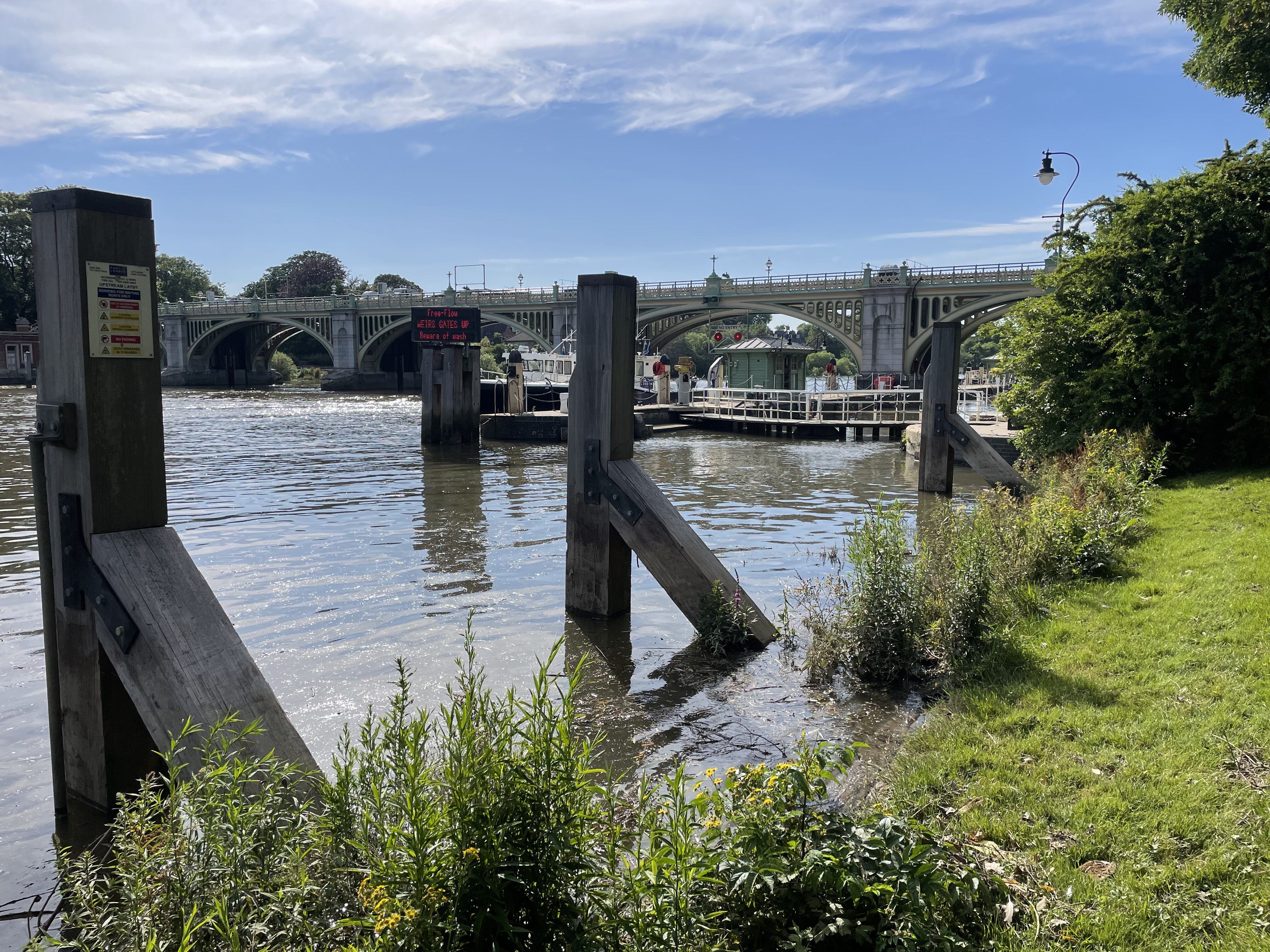
Teddington Lock, where many Richmond residents walk and gather, is the proposed abstraction point for the scheme. The lock marks the tidal limit of the Thames and sits within a stretch of river used for rowing, fishing, and wildlife observation. If the scheme proceeds, treated effluent would enter the river just upstream of Richmond Bridge, affecting the entire Richmond riverside.
The wider drought plan and what comes next
Thames Water has not yet confirmed whether it will proceed with the scheme despite the trial results.
The utility faces pressure from both regulators and environmental groups to address chronic leakage and improve infrastructure rather than rely on effluent substitution. Any full rollout of the Teddington scheme would require regulatory approval and likely trigger a statutory consultation, giving residents a formal opportunity to respond. The company is exploring multiple drought resilience options across its region, including reservoir expansion and transfers from other catchments, but the Teddington trial represents one of the most immediate and locally visible proposals. Environmental campaigners have called for the scheme to be abandoned entirely, citing both the chemical risk and the broader principle that treated effluent should not be used to mask supply shortfalls caused by leaks and poor maintenance.
If Thames Water pushes ahead, the next stage will be a planning and environmental assessment process where your voice, and that of local environmental groups, will carry weight.
What this means for you
If you walk, row, or spend time along the Thames between Teddington and Richmond, you have a direct interest in what enters the river at this point. Watch for any Thames Water consultation on the drought scheme, which would be advertised through the council and environmental groups if the company proceeds. You can also contact your councillor or Richmond Council’s environmental health team to ask what monitoring is in place and whether the council will formally object to the scheme based on the trial results. If you are part of a riverside community group, friends of a park, or a residents’ association, consider raising the issue at your next meeting so the group can coordinate a response. The Environment Agency regulates water quality and abstraction licences, and formal objections from local residents carry weight in their decision process. Keeping an eye on Thames Water’s public statements and any future trial data will give you the information you need to respond effectively when the time comes.
The trial results give Richmond residents a clear reason to pay attention to Thames Water’s next steps and to ask questions now rather than after a scheme is approved. Your engagement with consultations and council representatives can shape whether this plan proceeds, is modified, or is shelved in favour of better alternatives.
The technical term is PFAS (per- and polyfluoroalkyl substances), chemicals that persist in the environment and accumulate in living tissue. Thames Water’s pilot showed one PFAS compound spiking well beyond the legal threshold, translating an abstract pollution concern into a measurable risk at a location many of us walk past daily.
Frequently asked questions
What are 'forever chemicals' and why are they harmful?
- PFAS, or ‘forever chemicals’, are synthetic compounds that do not break down in the environment and accumulate in living tissue over time. They are linked to health concerns including liver damage, immune system effects, and increased cancer risk. Because they persist indefinitely, even low-level exposure can build up, making any significant new source of PFAS a concern for long-term environmental and public health.
Will the treated effluent affect Richmond's drinking water?
- Richmond’s drinking water does not come directly from the Thames at Teddington, but the scheme could affect water quality further downstream and in the broader Thames system. Thames Water treats drinking water to remove many contaminants, but PFAS are difficult to filter completely. The greater concern for most Richmond residents is the environmental impact on the river itself, which many use for recreation and which supports important wildlife habitats.
Can I still safely walk or spend time by the river near Teddington Lock?
- Yes. The trial results indicate what could happen if the scheme proceeds at full scale, but there is no current evidence of unsafe chemical levels from the pilot alone. The concern is about a future, ongoing scheme rather than residual contamination from the trial. Normal riverside activities remain safe, though it is worth staying informed about any developments or monitoring results Thames Water publishes.
How can I object to the scheme if Thames Water proceeds?
- Any full scheme would require regulatory approval and likely trigger a statutory consultation. You can submit a formal response during that consultation, contact your local councillor to ask Richmond Council to object, and raise the issue with environmental groups such as the River Thames Society or Thames21, who often coordinate resident responses. The Environment Agency is the regulating body for abstraction licences and water quality, and they consider public objections when making decisions.
What alternatives does Thames Water have to this scheme?
- Thames Water could reduce leakage, which accounts for a significant portion of water loss across its network. Other options include building new reservoirs, transferring water from other catchments, increasing household water efficiency, and investing in infrastructure rather than substituting effluent for river water. Environmental groups argue these alternatives are preferable to introducing treated wastewater into the Thames at such a visible and ecologically sensitive location.
Useful resources
Castelnau Dentists
Castelnau Dentists is a well-regarded dental practice situated at 200 Castelnau in Barnes, SW13, serving the local community with patient-centred care delivered by a team of dentists and hygienists. The…
The Bench
The last tomatoes in Richmond gardens are coming indoors
The last tomatoes in Richmond gardens are coming indoors now, bundled in newspaper or lined up on kitchen windowsills. The green ones will never see another warm day outdoors. But they will ripen. Slowly, reluctantly, they turn from hard jade to blushing orange to full, soft red. You pick them before the first frost. That […]
Local groups