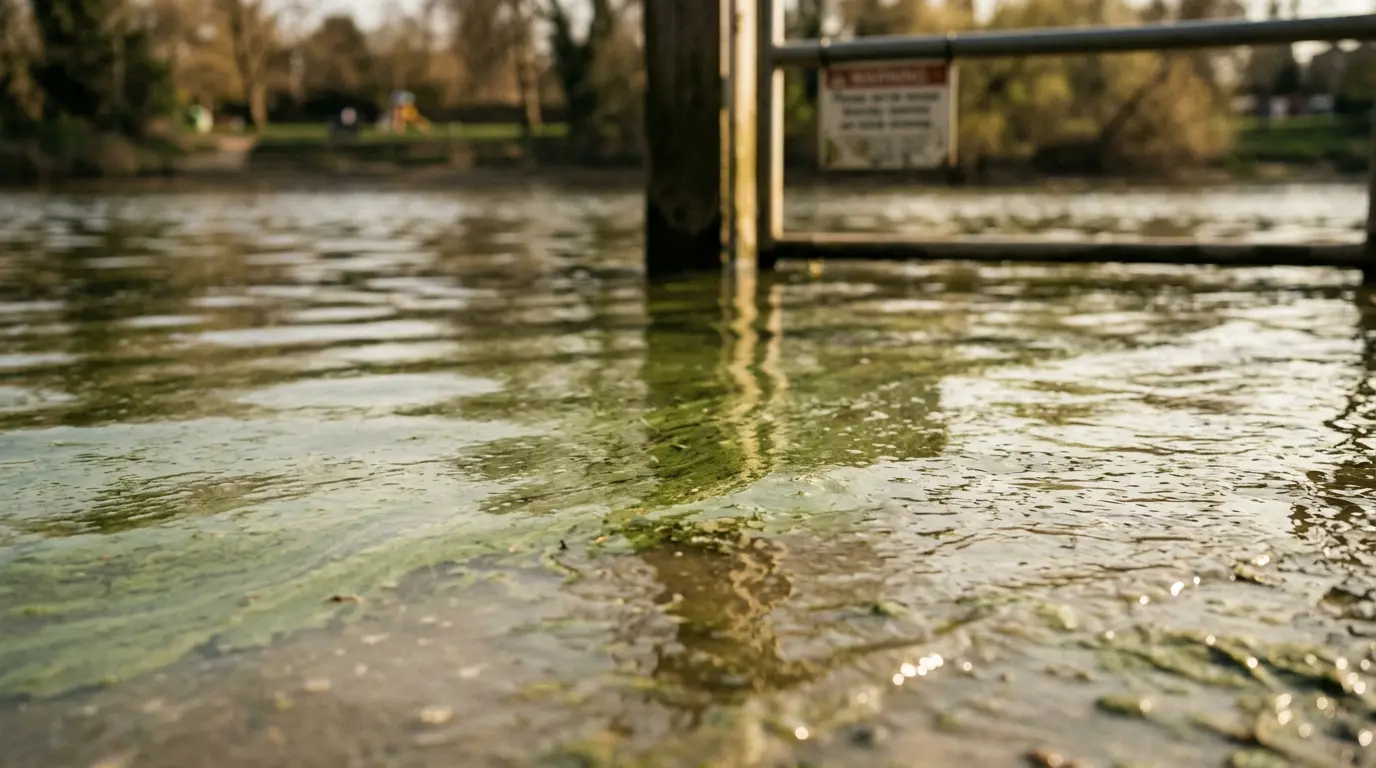
Toxic algae has been found in Ham bathing water, the stretch of Thames between Hampton and Kingston that won official bathing spot status just three months ago. The Environment Agency confirmed blue-green algae blooms in the area and is now testing water samples to understand the extent of contamination, which can harm swimmers, dogs and wildlife.
The discovery comes as the capital’s first official bathing site faces its first summer season under Environment Agency monitoring.
What the Environment Agency has found
The bloom was detected along the Ham and Kingston bathing area this week.
The Environment Agency said it is likely the section of river between Hampton and Kingston has been affected by the algae, which forms a greenish scum on the water surface in high concentrations. The agency is taking water samples over a 24-hour period to confirm how widespread the bloom is and whether toxin levels pose a risk to public health. Blue-green algae occurs naturally but proliferates in warm, nutrient-rich conditions, often during late spring and summer.
The timing is particularly notable given this stretch of Thames only received designated bathing water status in late 2026, making it subject to regular water quality testing for the first time.
Risks to swimmers and pets
High concentrations of blue-green algae can produce toxins harmful to humans and animals.
Contact with contaminated water can cause skin rashes, eye irritation and stomach problems if swallowed. Dogs are especially vulnerable because they are more likely to drink river water and can ingest algae while swimming or licking their coats afterward. Symptoms in pets include vomiting, diarrhoea, seizures and, in severe cases, liver failure. The algae often appears as green or blue-green scum, paint-like streaks or small clumps on the water surface, though it can also form below the surface. You should avoid entering the water if you see these signs, and keep dogs on leads near affected areas.
If you or your pet do come into contact with suspect water, rinse thoroughly with clean water as soon as possible and seek medical or veterinary advice if symptoms develop.
What this means for you
If you swim in the Thames between Hampton and Kingston, or walk your dog along the towpath, check the Environment Agency’s Swimfo website for the latest water quality updates before you visit. The site provides real-time information on designated bathing waters, including pollution alerts. Avoid entering the water if you see green scum or discolouration, and keep dogs out of the river until the all-clear is given. If you have already been in the water this week and develop symptoms such as rashes, nausea or unusual tiredness, contact your GP and mention possible algae exposure. For dog owners, watch for signs of lethargy, vomiting or difficulty breathing, and contact your vet immediately if you notice anything unusual after a riverside walk.
The Environment Agency expects to publish test results within the coming days. Until then, a cautious approach to river activities in the Ham and Kingston area is the sensible choice.
Blue-green algae is the common name for cyanobacteria, which thrives in warm, still water and can produce toxins that cause skin rashes, stomach upsets and, in rare cases, liver damage if swallowed in quantity.
Frequently asked questions
How do I recognise blue-green algae in the water?
- Look for green, blue-green or brownish scum on the surface, often with a paint-like appearance. It can also form small floating clumps or streaks. The water may have an unpleasant musty smell. If in doubt, stay out and keep pets away.
Is it safe to walk my dog along the towpath near Ham?
- Walking along the towpath is generally safe, but keep your dog on a lead and prevent them from drinking or swimming in the river until water quality tests confirm the area is clear. Algae can cling to the shoreline and be ingested when dogs lick their paws.
When will the bathing water be safe again?
- The Environment Agency is conducting tests over 24 hours and will update its Swimfo website with results. Algae blooms can disperse naturally with cooler weather or water movement, but there is no fixed timeline. Check official updates before entering the water.
Does this affect other parts of the Thames in Richmond?
- The Environment Agency has only confirmed the bloom between Hampton and Kingston. However, blue-green algae can spread or appear in other sections during warm weather. Apply the same visual checks and caution if you swim or walk pets elsewhere along the Richmond stretch of the river.
Useful resources
Castelnau Dentists
Castelnau Dentists is a well-regarded dental practice situated at 200 Castelnau in Barnes, SW13, serving the local community with patient-centred care delivered by a team of dentists and hygienists. The…
The Bench
The last tomatoes in Richmond gardens are coming indoors
The last tomatoes in Richmond gardens are coming indoors now, bundled in newspaper or lined up on kitchen windowsills. The green ones will never see another warm day outdoors. But they will ripen. Slowly, reluctantly, they turn from hard jade to blushing orange to full, soft red. You pick them before the first frost. That […]
Local groups